For scoliosis · mild to severe · Melbourne South-East
Scoliosis training in Melbourne that works on the whole structure, not just the curve.
One-on-one Functional Patterns coaching for people with scoliosis, across a wide range of Cobb angles and
including severe curves. I retrain how you stand, breathe, rotate and load, so your body has a reason to
organise differently, instead of just monitoring the number on a scan.
Free 30-minute consultation · no deposit, no card · then a place on the waitlist
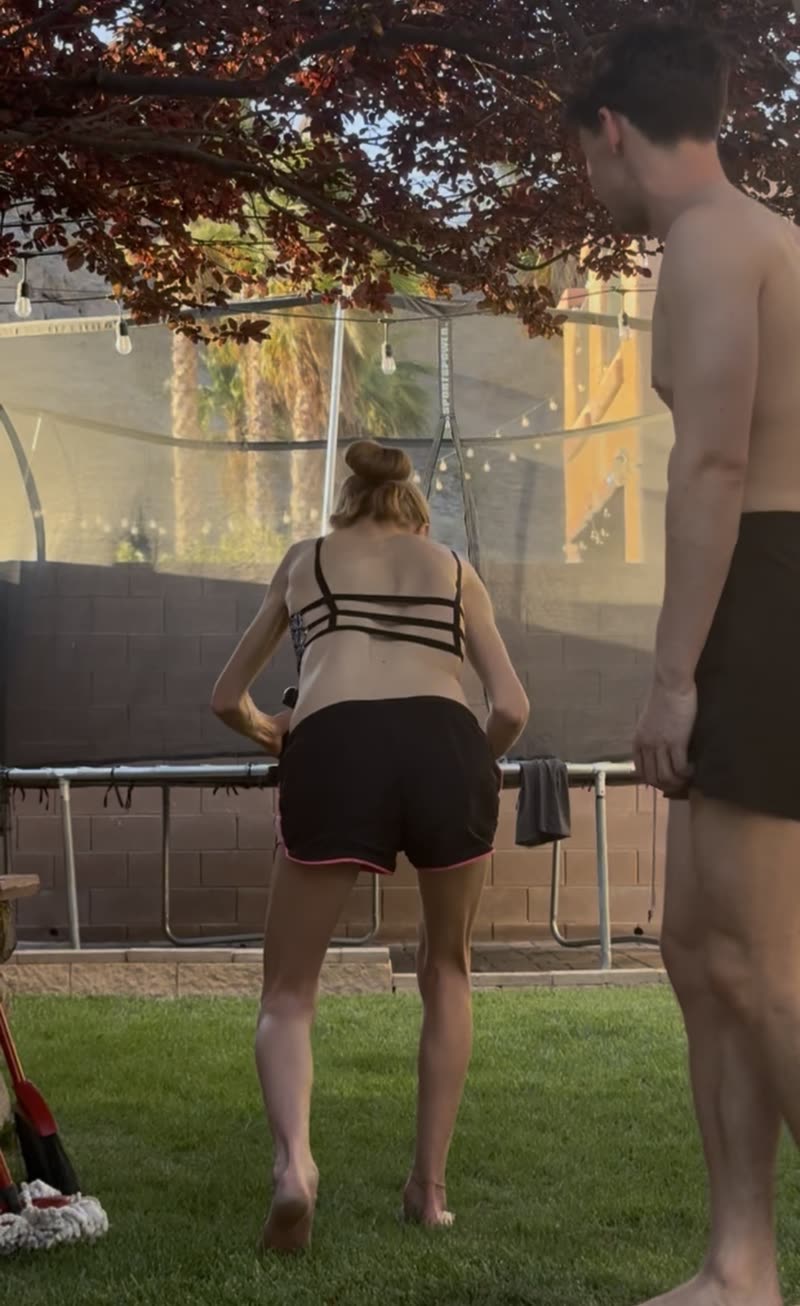
Coaching my friend Bree, a Functional Patterns trainer with scoliosis, through Functional Patterns techniques at a training course. Find Bree at Calgary Biomechanics →
★★★★★Five-star Google reviews · Malvern East
Any Cobb angleMild through to severe scoliosis · adolescent or adult
30 min30-min consultation, free · then the waitlist
Does this sound familiar?
You want to do something active about your scoliosis, not just monitor it.
Told to “watch and wait” and come back for another X-ray, while nothing addresses how you move day to day.
You know your Cobb angle but not what to actually do about it, beyond watching whether it progresses.
Pain, stiffness or fatigue that builds from years of the same compensation, usually on one side.
Bracing, stretches or generic core exercises that never change how you load your body.
A rib hump, uneven shoulders or a hip that sits higher that you can see and feel, but nobody is training.
Being told severe scoliosis means surgery or nothing, with no middle option offered.
A scoliosis isn’t just “a curve”. It sits alongside vertebral rotation, a shifted ribcage, an oriented pelvis and a one-sided breathing pattern, and all of that loads your spine the same way thousands of times a day. Change those inputs and your body has a reason to organise differently over time.
Who I work with
Every scoliosis is different, and I work across the range.
Your Cobb angle, the angle measured off a standing X-ray between the most tilted vertebrae at the top and bottom of your curve, is a useful reference point. It tells me how much compensation is built in and how patient to be. It doesn’t tell me what your body is actually doing, and it doesn’t put you in a box. People I train include:
Adolescent idiopathic scoliosis, the most common presentation, picked up in the teenage years.
Teen and adult scoliosis, including adult degenerative curves that showed up later in life.
Single C curves and double S curves.
Thoracic, lumbar and thoracolumbar curves.
Mild curves right through to severe scoliosis, where surgery has usually been raised.
People who are braced, people who are post-operative, and people who’ve never been offered anything but observation.
What I don’t do is sort you into a category and hand you the matching protocol. Two people with the same Cobb angle and the same curve type can need almost opposite work, because what drives a curve is how that particular person stands, breathes, rotates and loads. That’s what the assessment is for.
What it actually takes
Correcting a scoliosis isn’t a one-week job, and it isn’t about one tight muscle.
This is the part most people have never had explained to them. A curve isn’t a local problem sitting in your back waiting to be released. It’s a whole-body organisation, and changing it means working on four things together, over months rather than sessions.
Understanding your asymmetries
Not just that you’re asymmetrical, but exactly where and in which direction. Which way your vertebrae rotate, which side your ribs sit back on, how your pelvis is oriented, which foot takes more load. Two people with the same Cobb angle can need almost opposite work.
Continuity through the body
Your spine doesn’t act alone. A foot that can’t pronate and supinate properly changes what your pelvis does, which changes what your ribs and neck have to do. I treat the body as one continuous system, because that’s how it loads.
Myofascial chains, not single muscles
Force travels through connected myofascial chains and slings that wrap the trunk diagonally, shoulder to opposite hip. In a scoliosis those chains pull unevenly. Stretching the tight side alone just gives the same pattern a longer rope.
Muscles working together, and joints moving where they should
The goal is coordination and sequencing: the right muscles switching on in the right order, so movement gets shared. That means getting motion back into the segments that have stopped contributing, and taking load off the ones doing everyone else’s work.
So no, I can’t fix a scoliosis in a week, and I won’t tell you a foam roller and a stretch will do it. What I can do is show you, in one session, exactly which asymmetries are driving yours and what changing them would involve.
The approach
Why Functional Patterns for scoliosis?
A biomechanics-first method built on one principle: your structure reflects your repeated inputs. Rather than chasing the curve, I upgrade how you stand, walk, breathe, hinge, rotate and load, so your body organises around your spine differently.
Root cause, not the curve alone
I find the compensations feeding your asymmetry, a shifted ribcage, uneven foot loading, one-sided breathing, and retrain them, rather than stretching the symptom for an hour.
The “FP Big 4”
Standing, walking, running, throwing. Restore these and the trunk and pelvis start loading with control and rotation through both sides, not the same daily bias.
Tracked, not guessed
I measure with video, photos and clear movement benchmarks so progress is objective rather than a feeling. Any re-imaging is arranged through your own doctor.
On Cobb angle reductions. Practitioners working with the Functional Patterns method have documented reductions in Cobb angle in clients they’ve trained, alongside improvements in pain, breathing and function. Those are individual results, and I won’t promise you a number. What I commit to is training the inputs driving your curve and measuring what changes, so you can judge it for yourself.
movement
What the training actually looks like.
Short clips from sessions in the studio and from my own training. Slide through.
RG Bar workCore strength that carries into real life
Semi-private workout sessionIndividual coaching, small group
Seniors trainingBuilding foundational strength for all ages
RG Bell workBuilding real dynamic strength
Band work outsideContralateral reciprocation for better walking
Real client · complex case
Finding what isn’t contributing, and getting it back in the chain.
“His attention to detail has meant I now understand which parts of my body are switching on and working together and which ones aren’t. I was never going to get anywhere with the specialists or surgery as, fundamentally, no one was addressing how I’ve held and moved my body my whole life.”
A different client, mid-session. Real Functional Patterns training, real movement quality. More on the results page.
How to start
Three steps, and the first one is free.
You don’t have to decide anything about long-term training today. Come in for 30 minutes, at no charge, and find out whether this is right for your scoliosis.
1
Your free 30-minute consultation
A full 30 minutes at no charge. Your scoliosis history and any imaging, then a proper movement, breathing and gait assessment. Bring your X-ray or Cobb angle if you have one.
Start here →
2
A full biomechanical assessment
I look at what’s contributing to your scoliosis, where your deficiencies are, and what can be done to begin working on the structure, so you know exactly where to start to make real progress.
Then this →
3
Train consistently, and see results
Weekly one-on-one sessions with coaching, progression and short homework, working towards results like reductions in pain and small, gradual changes to your structure. No lock-in, and the pace is set around you.
Do you only work with mild scoliosis, or severe curves too?
Both. I work right across the range, mild curves through to severe scoliosis where surgery has already been raised, and with adolescent idiopathic, teen and adult degenerative presentations. A larger Cobb angle usually means more compensation to work through and a slower rate of change, not that training is off the table. What matters more than the number is how you currently stand, breathe and load, which is what the assessment looks at.
Can training reduce my Cobb angle?
Practitioners using the Functional Patterns method have documented reductions in Cobb angle in clients they’ve worked with, alongside improvements in pain, breathing and function. Those are individual results, and I won’t promise you a number. What I do commit to is training the inputs that drive the curve and measuring what changes. Any re-imaging is arranged through your own doctor.
How long before I see a change?
Longer than a week, and it isn’t about releasing a tight muscle. Most people notice changes in pain, breathing and control within the first few weeks. Structural change is a longer project, measured in months of consistent training, because you’re retraining myofascial chains and joint motion across the whole body rather than one area. Outcomes vary.
How is this different from Schroth, bracing or physio?
It’s coaching, not treatment, and it isn’t a scoliosis-specific exercise protocol or a brace. Rather than holding a corrective position or monitoring the curve, I coach the movements you repeat thousands of times a day: standing, gait, breathing, rotation, and how you load through your feet and pelvis. Many clients train with me alongside their specialist, physio or bracing program rather than instead of it.
Should I bring my X-ray or Cobb angle?
Yes, if you have one. A recent standing X-ray with a Cobb angle, curve location and any note on vertebral rotation gives me a useful reference point. It isn’t a requirement though, and I don’t diagnose or interpret imaging as a medical practitioner would.
What actually happens in the free 30-minute consultation?
Thirty minutes at no charge, in the Malvern East studio. I go through your scoliosis history, any imaging or bracing, and what bothers you day to day. Then a full movement and gait assessment: standing posture, trunk shift, rib position, how you breathe, and how you load left versus right. I show you what I’m seeing and what I’d work on first, with no obligation to book anything.
The consultation is really free? What’s the catch?
No catch. It’s a full 30-minute session at no charge, because the fastest way to show you this works is to just show you. You get a full biomechanical assessment, covering movement, breathing and gait, plus hands-on work. No deposit and no card. Booking takes a minute because I ask a few short questions first, about your goals and the time and budget you can realistically commit, so I can plan the session before you walk in. If you want to keep training after that, sessions are booked as you go with no lock-in.
Fully booked · waitlist open
Not sure whether this is right for your scoliosis?
Then don’t guess, and don’t commit to anything yet. Come in for a free 30-minute consultation and let me look at your curve, your gait and how you breathe, and I’ll tell you honestly whether I think I can help. Bring your most recent X-ray or Cobb angle if you have one. You keep the plan whether you train with me or not. I’m fully booked for ongoing training right now, so after the session I’ll add you to my waitlist and you’ll be first to hear when a spot opens up.
Free 30-min consultationNo depositPick a time below and answer a few quick questions. After the session, you’re on the waitlist.Pick a time →
Claim your free 30-minute consultation
Pick a time that suits you below and it’s booked, no back and forth. I’m fully booked for ongoing training, so after the session I’ll add you to my waitlist. No deposit and no card. Booking takes a minute because I ask a few short questions first, about your goals and the time and budget you can realistically commit, so I can plan the session before you walk in.
Tell me about your scoliosis, your Cobb angle if you know it, and what you want to change, and I’ll come back to you, usually within 48 hours.
Get in Touch
Melbourne · Malvern East · Functional Patterns. This is movement coaching to help you improve how you move, breathe and load; it’s not medical advice, diagnosis or treatment, and it doesn’t diagnose, treat or cure scoliosis. I don’t interpret imaging as a medical practitioner would, and any Cobb angle measurement or re-imaging is arranged through your own doctor. Outcomes vary. If you’re under medical care, I can work alongside it.